Contract maintenance for garden areas is worth considering when a property needs consistent landscaping, predictable upkeep, and reliable long-term care.
A well-maintained garden rarely happens by accident.
Grass needs regular cutting. Hedges need trimming. Leaves need clearing. Plants need pruning, fertilising, and monitoring.
For a homeowner, these jobs may be manageable.
For a condominium, residential development, commercial property, or community space, the workload can become much larger.
That is where a garden maintenance contract can make sense.
Instead of arranging maintenance only when problems appear, you have a planned service schedule.
The result is a garden that stays maintained throughout the year.
What Is Contract Maintenance for Garden Areas?
Contract maintenance for garden areas is a scheduled landscaping service where a contractor maintains a property according to an agreed scope and frequency.
Instead of paying someone whenever the garden becomes overgrown, the property receives regular maintenance.
A contract may include:
- Lawn mowing
- Grass cutting and trimming
- Hedge pruning
- Tree and shrub maintenance
- Weed removal
- Fertilising
- Plant care
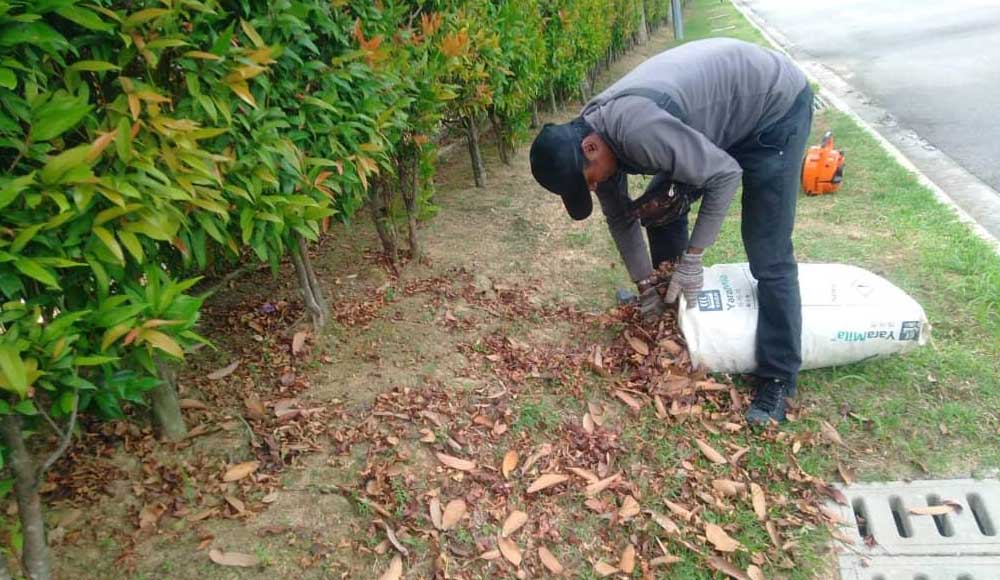
- Leaf clearing
- Green waste removal
- Irrigation checks
- General landscape cleaning
The exact scope depends on the property.
A small residential garden may need basic maintenance.
A large community may require a much more detailed maintenance schedule.
Why Do Properties Need Regular Garden Maintenance?
Regular garden maintenance keeps landscapes healthy, safe, attractive, and usable throughout the year.
Garden maintenance is not simply about making grass look short.
Different parts of a landscape require different types of care.
For example:
- Overgrown hedges can obstruct walkways.
- Fallen branches can create safety concerns.
- Blocked drains can affect water flow.
- Uncontrolled weeds compete with plants.
- Poor pruning can affect plant growth.
- Overgrown grass can make shared areas look neglected.
Regular maintenance helps identify these issues earlier.
It is similar to servicing a vehicle.
Small maintenance tasks are usually easier to manage than major problems that have been ignored for months.
Who Benefits Most from a Garden Maintenance Contract?
Garden maintenance contracts are particularly useful for properties with large landscapes or shared outdoor areas.
Different property types have different maintenance requirements.
Residential Communities
Gated communities and residential developments may have:
- Entrance landscaping
- Guardhouse planting
- Shared lawns
- Roadside greenery
- Walking paths
- Playgrounds
- Clubhouse gardens
- Recreational areas
These spaces represent the community as a whole.
Regular maintenance helps keep common areas presentable for residents and visitors.
Condominiums and Apartments
High-rise developments often have extensive shared landscaping.
The management team may need to maintain:
- Poolside planting
- Garden areas
- Lawns
- Pathways
- Trees
- Hedges
- Entrance landscaping
A scheduled maintenance contract can give the management team a clearer system for managing these areas.
Commercial Properties
Office buildings, retail properties, industrial parks, and business premises may also require landscape maintenance.
A neglected landscape can affect the overall appearance of the property.
Regular maintenance helps keep entrances, pedestrian areas, and outdoor spaces professional.
Community and Recreational Facilities
Community spaces often receive regular use.
Examples include:
- Playgrounds
- Parks
- Walking trails
- BBQ areas
- Multipurpose spaces
- Clubhouses
- Open lawns
These areas benefit from planned maintenance because they need to remain usable and presentable.